
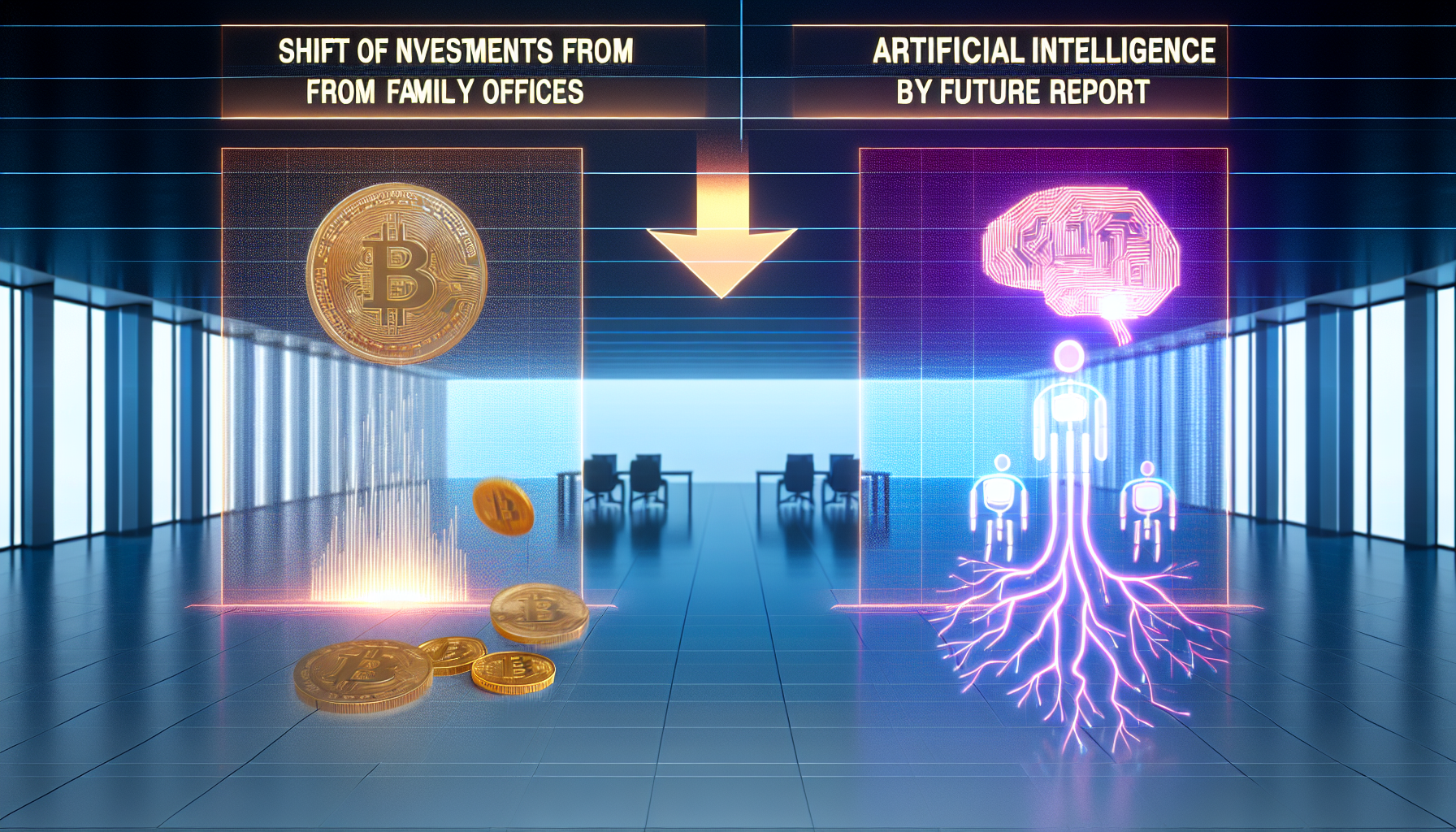
Family Offices Embrace AI Over Crypto in Pursuit of Long-Term Growth
In a striking revelation from J.P. Morgan’s latest Global Family Office Report, wealthy families managing vast fortunes are overwhelmingly prioritizing artificial intelligence as their top thematic investment, sidelining cryptocurrencies despite their past hype. Surveying 333 single-family offices with an average net worth of $1.6 billion, the report uncovers a clear preference for AI’s transformative potential over the speculative allure of digital assets. Nearly 89% of these private wealth stewards report zero exposure to crypto, with average allocations to Bitcoin and other cryptocurrencies hovering below 1%. This shift underscores a maturing investment landscape where tangible innovation trumps volatility.
The AI Investment Imperative: Words Versus Wallets
Family offices are vocal about their enthusiasm for AI, with 65% citing it as a priority for the coming years. Yet, the report exposes a glaring disconnect between rhetoric and reality. More than half lack exposure to AI-critical sectors like growth equity or venture capital, where early-stage AI innovators thrive. Even more starkly, nearly 80% have no allocations to essential infrastructure—think data centers, power facilities, and energy production—that underpins AI’s scalability.
This hesitation persists despite AI’s promise as a new industrial revolution. Experts like Christophe Aba, deputy head of investment and advice at J.P. Morgan Private Bank, urge investors to venture beyond mega-cap leaders such as Nvidia or Microsoft. “To fully capture the AI opportunity, investors should look beyond the mega-cap leaders and focus on the enablers driving the supply chain—from semiconductors and power infrastructure to networking and cooling systems,” Aba advises. Private markets hold particular allure, with the top ten AI companies already valued at around $1.5 trillion, signaling immense untapped value outside public exchanges.
Portfolios reflect this caution through heavy weighting in familiar territories: public equities claim 38.4% on average, while alternatives like private investments, hedge funds, and commodities take 36.8%. Inflation concerns drive this tilt, with some families dedicating up to 60% to alternatives for stability amid macroeconomic turbulence.
Crypto’s Cold Shoulder: Why Family Offices Are Staying Away
Cryptocurrencies, once the darling of high-risk appetites, have fallen out of favor among family offices. Close to 90% shun digital assets entirely, viewing them as too opaque and unregulated. Respondents highlight macroeconomic uncertainties, regulatory ambiguity, and the lack of proven profitability paths as primary deterrents. In an era of geopolitical tensions, trade disruptions, and persistent inflation risks, crypto’s volatility feels like an unnecessary gamble.
This aversion extends to other “safe-haven” assets perceived as risky or illiquid. Nearly three-quarters hold no gold, and infrastructure—crucial for AI yet overlooked—averages just 0.7% of portfolios. Instead, family offices overweight traditional alternatives like private equity and real estate, which offer more predictable returns and alignment with long-term wealth preservation goals.
Navigating the AI Ecosystem: Key Opportunities Ahead
J.P. Morgan outlines a pragmatic four-part strategy for capturing AI’s upside while mitigating exuberance:
- Focus on large-cap leaders: Established tech giants continue to dominate AI adoption and value creation.
- Target the supply chain enablers: Investments in semiconductors, energy infrastructure, networking, and cooling systems promise outsized growth as AI demand surges.
- Identify smart corporate AI users: Companies leveraging AI for operational efficiencies across industries—from healthcare to manufacturing—stand to gain competitive edges.
- Prioritize private market exposure: Venture and growth equity in AI startups represent the next frontier, where billions in future value are being forged.
These avenues align with family offices’ three-to-five-year horizons, driven by advances in cloud computing, data analytics, and startup funding. Yet, execution lags: nearly six in ten have no venture or growth investments, underscoring the need for specialized expertise.
Governance and Outsourcing: Building Resilience for Complex Portfolios
As family fortunes grow and pass through generations, internal complexities mount. Over 40% of business-owning families flag conflict as a top concern, prompting more formal governance structures. This professionalization extends to investments: 80% outsource some portfolio management, with over one-third of billion-dollar offices delegating more than half. Scarce talent and the demand for niche skills—like AI evaluation—make outsourcing a strategic necessity.
Elisa Shevlin Rizzo, head of family office advisory at J.P. Morgan Private Bank, notes this “delta” between intentions and actions. Families aim to fortify against inflation and solidify succession plans, but portfolios often lag, sticking to drawdowns over evergreens like venture capital.
Beyond AI and Crypto: Broader Portfolio Trends
The report paints a picture of cautious ambition. Family offices remain relatively bearish on sectors like space, water, entertainment, and gold, favoring inflation hedges such as hedge funds and real estate. This conservatism suits their mandate: preserving multi-generational wealth amid uncertainty.
Yet, AI’s momentum is undeniable. As a driver of cloud computing revolutions and data-driven insights, it offers more concrete paths to profitability than crypto’s speculative cycles. By bridging the gap between aspiration and allocation, family offices can position themselves at the forefront of this technological shift.
Takeaways for the Future of Family Office Investing
J.P. Morgan’s 2026 Global Family Office Report signals a pivotal evolution: AI has eclipsed crypto as the premier investment theme, reflecting a preference for substantiated growth over hype. While 89% exposure to zero crypto underscores risk aversion, the untapped AI potential—especially in private markets and infrastructure—beckons. Family offices must close the action gap through targeted allocations, robust governance, and strategic outsourcing. In doing so, they not only safeguard legacies but harness AI’s promise to redefine wealth creation for generations to come. The message is clear: in the new era of promise and pressure, smart money flows to innovation with infrastructure, not speculation.