
Bitcoin mining is a lucrative emerging industry
The cryptocurrency market is well and truly in its golden era, boasting a total market cap of over $160 billion. Led by Bitcoin, which has seen more than 550% growth in value in 2017 and currently in touching distance of $6,000, the business of generating cryptocurrency through the process known simply as mining has never been more attractive.
Even with analysts predicting that cryptocurrency is yet to reach its full potential, large corporations are continuing to expand, setting up industrial farms housing highly-specialized equipment dedicated to mining and generating new units of Bitcoin and other cryptocurrencies.
Despite already having mined more than 16 million of the possible 21 million Bitcoins, the current network still currently awards a reward of 12.5 Bitcoins for every block found by miners – more than $62,000 at today’s value, roughly every 10 minutes. That’s an industry generating $9 million in Bitcoin alone each day.
Mining will only get more difficult
The current network rewards and fees (charged by miners for including transactions in blocks) will remain for about three more years before halving (block rewards halve every 210,000 blocks). If price projections maintain their historical trend, then Bitcoin’s increasing price will mean that future halvings won’t negatively impact mining revenue. Hence, mining will continue to be a profitable venture for the foreseeable future and will attract more newcomers eager for their share of mining profits.
A historical graph charting Bitcoin’s difficulty adjustments show this to be true. Apart from a sharp (and momentary) drop attributed to the August 2017 Bitcoin hard fork that led to miners switching over to mine Bitcoin Cash, global hash rates are growing. And along with that, network difficulty, which currently stands at 9.55 Exahashes/s. That’s 9.55 million trillion hash rate.
For perspective, a high-end Android device generates up to 1 MH/s. So the global hash power of the Bitcoin network today equals 9.55 trillion Android devices.
A booming industry with an appetite for power to match
The very first Bitcoin miners were able to use personal computing power (contributing hashing power) to solve cryptographic puzzles key to securing the network and verify transactions. But as more and more miners entered the network, the difficulty of solving these complex algorithms – by design – gradually increased over time to adjust for the growing pool of hashing power.
When normal CPUs were not sufficient, miners turned to more powerful GPUs, and then later to specialized hardware dedicated to cryptographic crunching called ASICS. As the machines became more sophisticated, the amount of electricity they consumed grew proportionally. But as profits are still to be gained, people are still willing to operate high-energy machinery racking up huge electricity bills.
The implications of this have been noticed as early as 2013, when economists reported that Bitcoin mining was generating 8.25 Megatonnes of greenhouse gas emission thanks to 131,000 MWh annual electricity consumption, 0.03% of the world’s output then. Today, the industry burns through 21.39 Twh of electricity per year according to Bitcoin Energy Consumption – a rate of more than 163 times only four years ago. This equals to an estimated annualized global mining cost of $1.07 trillion. If Bitcoin were a country, it would rank 70 out of over 200 in terms of electricity consumption.
Is Crypto mining is a threat to the environment?
In 2016, BBC showed that 70% of Bitcoins were generated in China, where electricity fueled largely by coal mining results in one of the largest carbon footprints in the world. Elsewhere, it’s not much better. The concentration of today’s Bitcoin mining industry outside of China is still in countries that rely on energy-producing technologies that are not efficient.
In 2016, BBC showed that 70% of Bitcoins were generated in China, where electricity fueled largely by coal mining results in one of the largest carbon footprints in the world. Elsewhere, it’s not much better. The concentration of today’s Bitcoin mining industry outside of China is still in countries that rely on energy-producing technologies that are not efficient.
Using estimates from Shrink That Footprint, coal has a carbon intensity of about 1,000g CO2/kWh, oil is 800g CO2/kWh and natural gas is around 500g CO2/kWh. The least carbon-producing technologies are renewable sources of energy such as nuclear, hydro, wind and solar, which all produce less than 50g CO2/kWh.
If data is extrapolated to assume that 70% of crypto mining is powered coal and the rest by natural gas, then we are looking at an industry that is producing 18.18 million tonnes of CO2 annually. That amounts to 0.2% of the 9.9 billion tonnes of global emissions from fossil fuels. This figure has grown from only 0.03% four years ago.
So is crypto mining a threat to the environment? Is it contributing to global warming? The evidence is pretty damning.
What is the solution?
It will be difficult to doubt that Bitcoin and cryptocurrency mining is an industry that is here to stay for many years to come. For as long as mining remains profitable, more miners will join the fray, and electricity consumption will stay on its upward trend.
Banning the industry will only drive it farther underground, as it is an industry that is already known for highly-secretive operations, while home miners can still operate relatively undetected.
Cryptographic experts and cryptocurrency proponents have already introduced technological alternatives to the current Bitcoin network so-called “Proof-of-Work” algorithm. A new Bitcoin fork called Bitcoin Gold scheduled for October 2017 will implement a new algorithm that is ASIC-resistant, only allowing miners to use GPUs. Other algorithms minimize the need for intensive computing power to secure the network.
However, all these proposed solutions are unlikely to succeed for now, as they would require a huge overhaul of the Bitcoin infrastructure. ASIC-resistant solutions are also notoriously short-lived, as it is only a matter of time before new computers are created to overcome protocol limitations.
So the long-term solution would seem to lie in the source of electricity: switching from older, non-renewable fossil fuel technology to cleaner, eco-friendlier renewable energy.
HydroMiner’s mission to introduce crypto mining powered by renewable energy
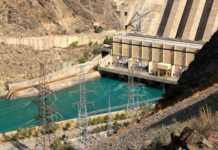
HydroMiner is a cryptocurrency mining company using green energy drawn from hydro power stations in the Alpine region of Europe. Regarded as one of the cleanest and most effective sources of energy, electricity generated from hydro power emits less than 1% of CO2 from conventional fossil fuel power, and between 50-90% less than other renewable source. In some cases, as in HydroMiner operations, it is even carbon-neutral.
Hydro power allows HydroMiner to manage resources sustainably and enables low-emission production. What’s more, the technology is simple, controllable and has an excellent track record. Using hydro power stations in the Alps region, the company is able to access one of the lowest prices per kW in Europe. In fact, its cost of electricity is currently 85% lower than the average in Europe – putting it within competitive range of geographical regions with cheap electricity such as China and North Europe.
Where possible, HydroMiner mining equipment is housed by standard sea freight containers. These are easily assembled near the Vienna-based headquarters to be shipped to the hydro power station. HydroMiner has a proven method for equipping containers with mining gear utilizing extremely effective cooling and ventilation equipment.
An added advantage is the location: cool ambient temperatures all year round and cool-flowing rivers aid greatly in cooling the mining rigs, further reducing electricity consumption.
The HydroMiner ICO and H2O token sale
HydroMiner aims to be a pioneer in renewable energy crypto mining, and is committed to operating a successful business that is transparent and fully compliant. It is incorporated in Austria as a GmbH (limited liability company) and takes continuous steps to fall in line with present and upcoming regulatory and compliance with regards to cryptocurrency.
HydroMiner plans to scale up its operations, opening to the public a chance to participate in the profitable industry of crypto mining. After a successful pre-sale, the company has now launched an ICO running from October 18 to November 15, 2017, 10:00 UTC.
Up to 25 million H2O tokens will be up for sale at a base price of 1 ETH = 100 H2O. Once the HydroMiner project starts in February 2018, token holders will be able to redeem H2O tokens fro mining credits, expressed as 1 H2O = 5kWh for 24 months, earning cryptocurrency mined from its mining farms every month.
Early supporters can take advantage of a 20% bonus on tokens sold during the first week, 15% bonus on the second week, 10% bonus on the third week and 5% bonus on the fourth week. This bonus will apply for every subsequent redemption after the initial one expires in 24 months, up to the amount initially bought.
To participate in the ICO, visit the HydroMiner token sale page, register an account on the platform and whitelist your contribution address before contributing.
For more technical details, read the white paper or visit the Telegram group to join discussions with the development team.