
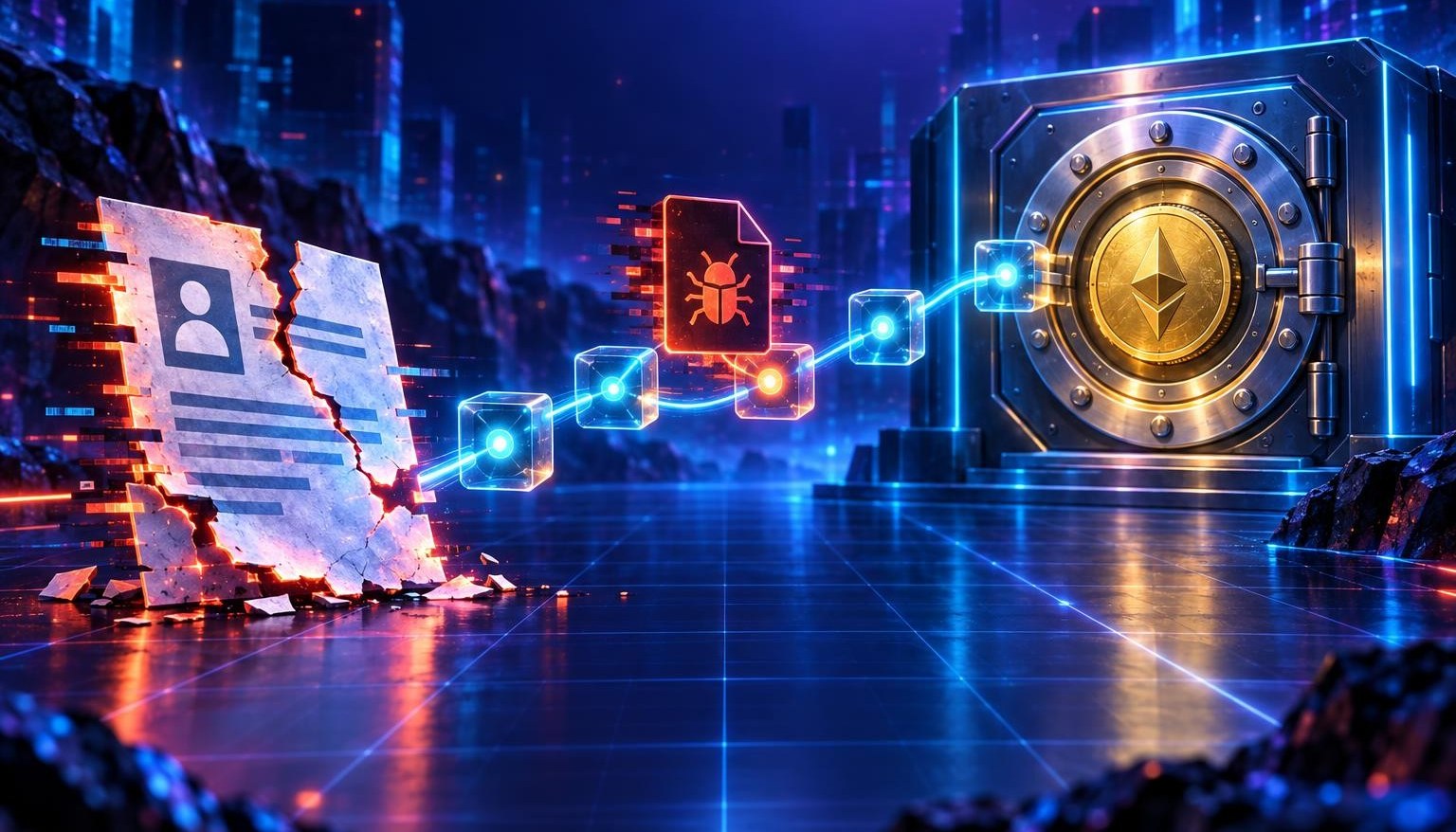
A fake interviewer shared a social media account filled with personal photos and videos to build trust with a Binance engineer. The technical detail that followed was a malware file named pyenv, which replaced a legitimate development-tool component after the original file was removed.
That trust-building step began a longer attack chain. Binance said the October 29 breach involved social engineering, malware, compromised internal AI tooling, access to engineers’ computers and an advanced transaction-authorization method. Its incident report describes several stages, from a hiring approach to activity affecting wallet systems.
The fake interview made a work device part of the attack
Binance said the engineer was contacted in September through a legitimate job-hunting platform by someone posing as a project director at a fake company. During a live video interview, a fake HR representative shared the social account, including personal photos and videos, to make the approach seem credible.
The next interview took place on a popular social chat app. Binance said a person posing as the company’s CEO told the engineer to download an “assignment.” The assignment contained a malware-laced code repository, and its code ran during setup on the engineer’s work computer.
The malware replaced the pyenv component, then ran commands and contacted an attacker-controlled server, Binance said. The attackers also hid the script to evade detection. Binance’s endpoint security tools did not immediately flag it.
The interview was the way into a work device, rather than the final breach. The fake company used a familiar hiring process to get code executed on that device, then relied on the resulting access to reach systems and credentials tied to Binance’s wallet infrastructure.
Earlier exposure gave the attackers a longer route in
Binance traced the preparation to June, when one engineer downloaded a malicious Homebrew installation. The security team detected the malware, replaced the device and rotated affected credentials. Binance said the engineer’s role and related colleagues on the wallet infrastructure team had also been exposed to the attacker.
In October, the attackers used the compromised computer and an internal AI tool to reach the computers of wallet DevOps engineer A and another wallet software developer, Engineer C. Binance said Engineer A’s computer held a container deployment permission token, which the attackers discovered.
On October 29, the attacker accessed Engineer C’s computer and used credentials stolen from Engineer A to deploy a container. The attacker then triggered a script that launched the theft, Binance said. The company did not describe the “advanced transaction-authorization method” in detail in the source material, so the exact final authorization step is unclear.
The FBI attributed the attack to North Korea in its public alert. That attribution places the breach within a wider North Korean campaign. Binance’s account describes how the attackers combined a targeted hiring scam with access to internal systems.
Trust signals failed because they were easy to manufacture
The personal social account was a trust signal, not proof that the recruiter or company was legitimate. Binance described the approach as more advanced and deceptive than social engineering it had previously seen. The attacker used live interviews and personal-looking content before delivering the infected assignment.
The security failure extended beyond one employee downloading a suspicious repository. The malware escaped immediate endpoint detection, and the attackers later used an internal tool to reach other computers. Engineer A’s deployment permission token and credentials stolen from him helped the attackers reach the wallet operation.
Binance said it rebuilt the compromised wallet system and internal AI tool, replaced affected devices, and decommissioned credentials and tokens assigned to the compromised engineers. The company is working with law enforcement, blockchain intelligence firms and security researchers to trace and freeze assets. It also hired independent cybersecurity experts to review the incident.
What holders and engineering teams can do with this
For holders, the incident is a reason to check where assets are held and what protections apply, rather than treating exchange security claims as interchangeable. Grayscale’s Zach Pandl said its US crypto exchange-traded products hold assets at state-chartered banks and qualified custodians, typically with offline storage, multisignature wallets, SOC attestations and insurance policies, in Grayscale’s report.
For engineering teams, code supplied during hiring should be treated as untrusted, even after a live interview and a convincing social profile. Review the commands that setup scripts run, limit the permissions available to developer machines, and keep deployment tokens out of reach of a compromised endpoint.
The Binance sequence shows how those controls relate to the attack. The fake assignment gave the attackers a foothold, while the token and later credential use helped turn that access into a wallet-system attack.
Binance said it is also working to establish a security research fund and initiatives with AI companies and security firms focused on AI security in blockchain environments. It hired independent experts to review the incident and recommend additional protective measures. The review’s recommendations are the next concrete unknown.